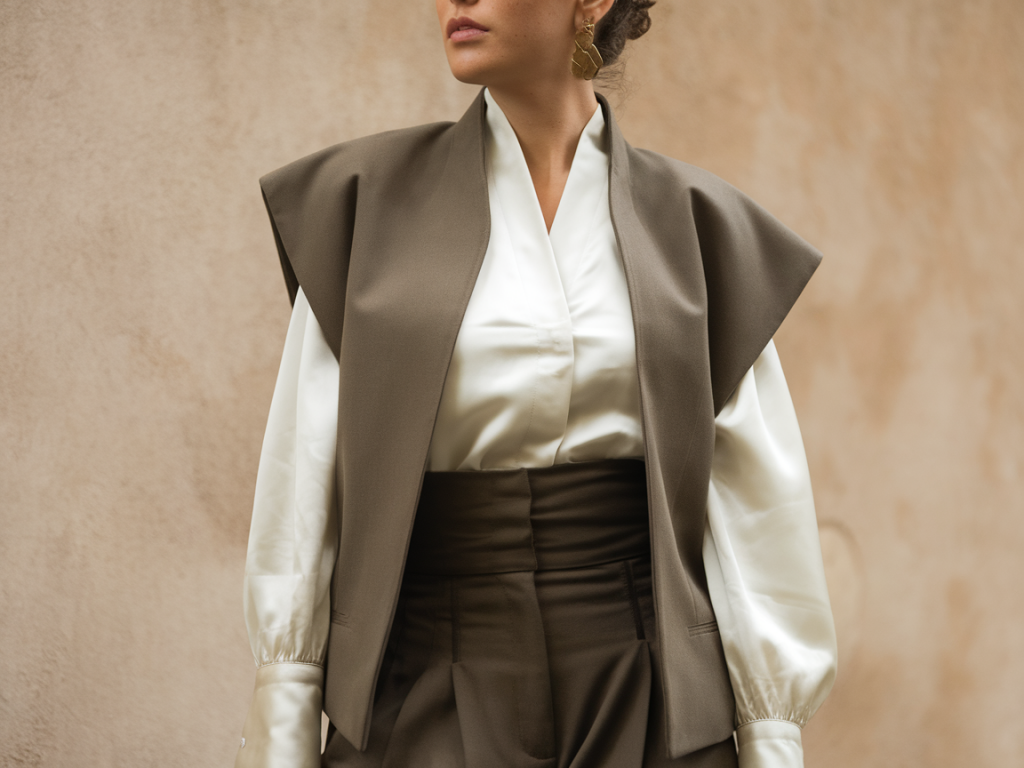
I love the way a strong shoulder can instantly change the mood of an outfit. When I first tried a veste à épaulettes structurées pour femme, I felt simultaneously powerful and playful — like my silhouette had been given a compelling headline. Over time I’ve learned that structured-shoulder jackets are one of those wardrobe pieces that can be surprisingly versatile if you know how to style them with intention. In this article I’ll share how I wear them, what to look for when buying one, and practical tips to adapt the look to different occasions and body types.
Why the structured shoulder matters
Shoulder pads and tailoring aren’t a mere fashion affectation: they shape proportion. A well-made structured shoulder creates a defined line that can balance hips, slim the waist, and give an upright, confident posture. For me, that little architectural element transforms casual basics into outfits that read thoughtful and put-together.
Choosing the right jacket
Not all structured-shoulder jackets are equal. Here’s what I check before committing:
Styling for a casual daytime look
One of my favourite everyday outfits is a structured-shoulder blazer paired with relaxed denim. It’s an easy way to feel dressed without trying hard.
Office and professional outfits
For work, the sharp shoulder is practically a power move. I often pair my blazer with tailored trousers in a matching or complementary tone for a cohesive suit effect.
Evening and statement looks
If I want to push a bit further, I treat the jacket like the star of the outfit.
Balancing proportions for different body types
Structured shoulders can flatter many body types if proportion is respected. Here are some guidelines I follow and recommend:
| Body type | What I choose | Why |
| Pear-shaped | Moderate to slightly extended shoulders | Adds balance by visually widening the upper body to match the hips |
| Apple-shaped | Soft-structured shoulders, single-breasted styles | Creates shape without adding bulk; single-breasted keeps vertical lines |
| Rectangle | Pronounced shoulders with nipped-in waist | Introduces curve and definition at the waist and shoulder |
| Hourglass | Proportionate shoulders, tailored waist | Maintains natural balance; avoid overpowering oversized shoulders |
Color, print and seasonality
Choosing color and pattern can shift the mood of a shoulder-structured jacket entirely.
Layering and undergarments
Layering can either support or sabotage the structured shoulder. I learned this the hard way when bulky layers distorted a beautiful blazer.
Brands and shopping tips
I’ve found great structured-shoulder jackets across price points. High-street brands like Zara and Mango often give trendy takes, while brands like Balmain and Alexander McQueen offer iconic, architectural shoulders if you’re investing. For mid-range picks, I like Massimo Dutti and Reiss for quality construction without the excessive price tag.
Maintenance and care
Structured shoulders require a little extra attention to retain their shape.
Wearing a jacket with structured shoulders changed how I think about proportion and presence. It taught me that small tailoring details can elevate everyday dressing and that power dressing doesn't mean sacrificing personality. Experiment — try a soft-shoulder blazer one day and a sharply structured one the next — and you’ll soon know which iterations feel like you.