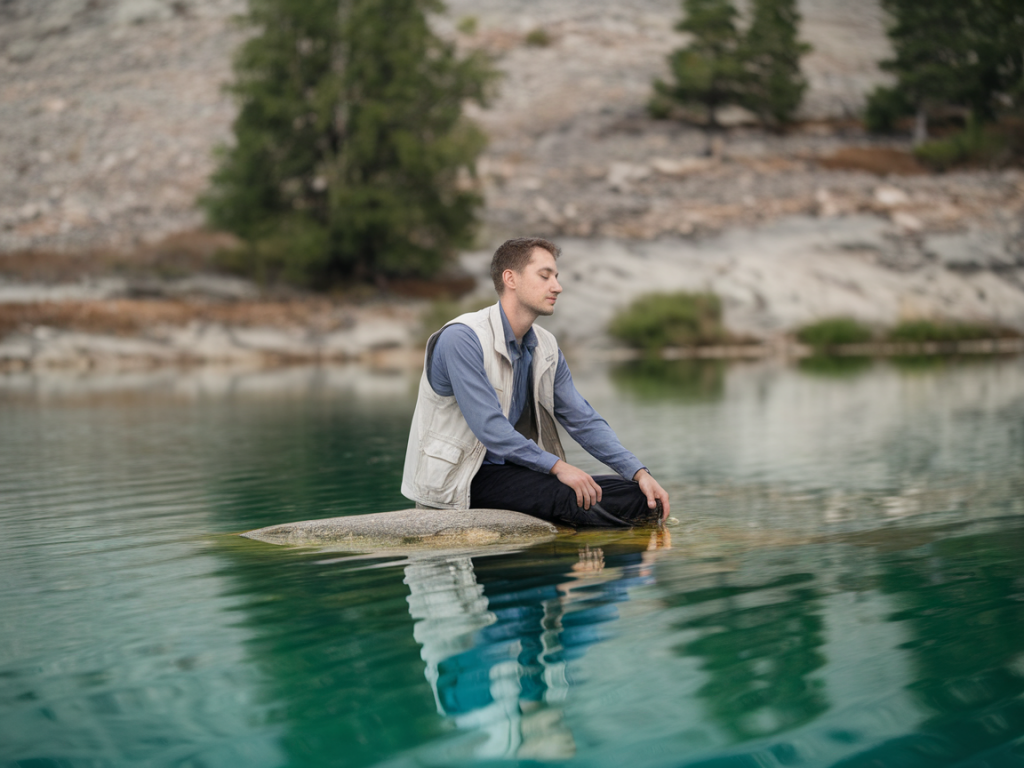
I don’t know about you, but when my brain feels cluttered—emails piling up, a draft stuck at the same sentence for an hour, or a to-do list that keeps growing—the quickest, cheapest, and most reliably restorative thing I reach for is a short walk. Over the years I’ve turned these little outings into a deliberate ritual: twenty minutes, a simple route, and a handful of tiny rules that help me come back clearer-headed and—more often than not—brimming with ideas.
Why a short walk actually works (the science)
There’s good research behind this habit. Studies show that walking boosts divergent thinking—the kind of free-flowing idea generation we call creativity. A frequently cited experiment by Oppezzo and Schwartz (2014) found that people performed better on creativity tasks while walking than while sitting. Other work supports the idea that even brief bouts of movement can reduce mental fatigue, improve mood, and help with problem-solving.
Attention Restoration Theory (ART), developed by Kaplan and Kaplan, adds another layer: certain environments—especially those with softly fascinating features like trees, water, or gentle patterns—allow our directed attention to recover. Combine that with the cognitive benefits of low-stakes physical movement and you get a powerful micro-reset for creative work.
My 20-minute blueprint: how I structure a creativity-reset walk
I designed this routine to be practical and repeatable. It fits between meetings, after lunch, or when a task needs the kind of incubation you can’t force at your desk.
| Minute | What I do | Why it helps |
|---|---|---|
| 0–2 | Pause, look around, set a simple intention | Creates a mental container; reduces resistance to letting go |
| 2–7 | Walk at an easy pace, breath awareness | Lowers arousal and clears short-term memory clutter |
| 7–14 | Free-thought time: let ideas float, no judgments | Encourages divergent thinking and unexpected associations |
| 14–18 | Pick one idea to play with; say it aloud or record a note | Moves thought from vague to actionable; captures insight |
| 18–20 | Short grounding—three deep breaths, plan one next step | Prepares you to return to work with clarity |
Choosing a route (short and kind to your attention)
Not all walks are equal for creativity. I look for routes that are short (about 1–1.5 km), mostly uninterrupted, and offer a bit of sensory variety. That might be a tree-lined street, a riverside path, or even a courtyard with potted plants. I avoid places that demand high vigilance—busy intersections, chaotic markets—because those environments pull attention back into problem-solving mode rather than letting it relax.
If you live in a city and green spaces are scarce, a route past cafes, murals, or even a rooftop garden can work. The key is "soft fascination": something interesting enough to occupy peripheral attention without being so stimulating it hijacks your thinking.
What to do during the walk (practical prompts)
I used to think I needed silence or a podcast, but I learned to be choosier. Here are options depending on your needs:
I often combine methods: start silent, allow ideas to surface, then record the most promising one with a quick voice note on my phone. That tiny act of capture prevents the "I’ll remember it later" trap.
How to use constraints to boost creativity
Constraints are surprisingly liberating. When I’m stuck, I give myself a simple constraint to work within during the walk. Examples:
Constraints focus divergent thinking and make ideation less aimless. They also provide a ready-made way to judge which ideas are useful when you return.
Tools and small rituals that make walks consistent
When you want a habit to stick, small rituals help. Here are the ones that work for me:
Dealing with common obstacles
Not every walk will feel instantly productive, and that’s okay. Here’s how I handle the common hiccups:
How to bring ideas back into your work
Walking is incubation; the return to work is where ideas become useful. I follow two quick steps:
Over time, these 20-minute walks build a bank of small insights and connections. I’ve used them to solve editorial puzzles, generate travel-route ideas, and even reframe stubborn problems with fresh metaphors. The beauty is that they’re low-cost, portable, and humane: a short break that respects attention rather than demanding a dramatic escape.
If you try this blueprint, start with one walk a day for a week and keep a simple log of whether you felt clearer or produced any useful output afterward. You might be surprised how often a little movement and a small ritual can open the door to better ideas.