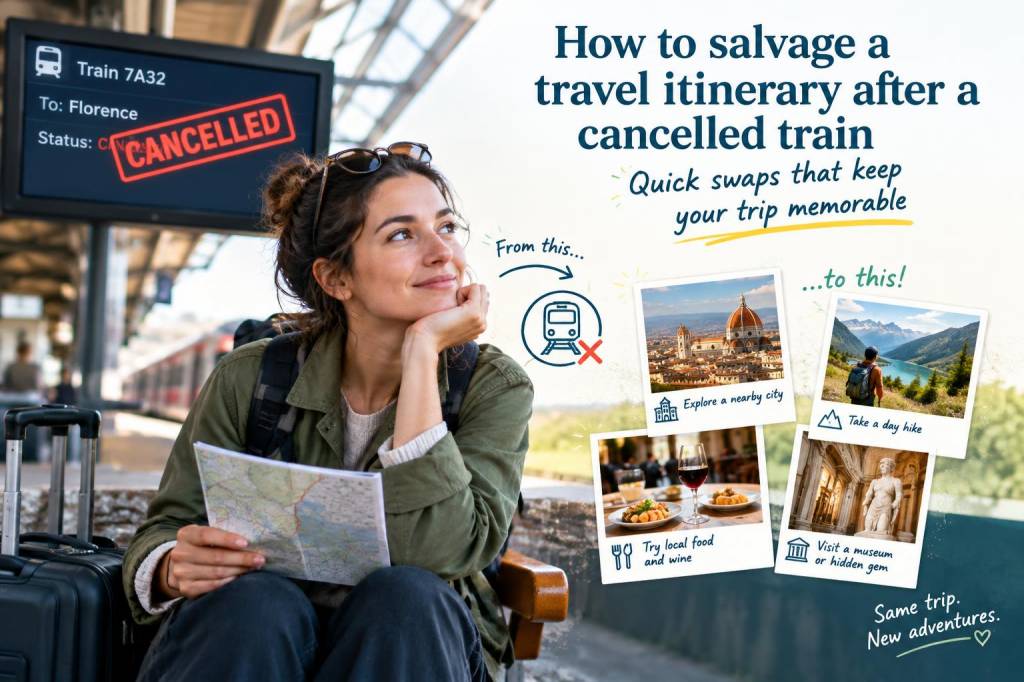
I once had a sunlit plan to travel from Bath to the Cotswolds by train for a long weekend, only to find myself on the platform as the departure board blinked “Cancelled.” That moment of disappointment — and the scramble that followed — taught me that a cancelled train doesn’t have to ruin a trip. With a bit of calm, a few quick swaps, and a willingness to embrace the unexpected, you can still have a memorable journey. Here’s how I salvage an itinerary when transport plans fall apart, with practical tools and on-the-ground tactics you can use immediately.
First five minutes: stay calm and gather facts
When I see “Cancelled” on a board, my first instinct is to breathe. Panic makes bad choices faster. Instead, I do three quick things:
Check the nearest departure board and official station announcements for reasons and expected duration of disruption.Open the train operator’s app or the National Rail Enquiries app to see official updates, alternative services, and refund or rebooking options.Take a photo of the cancellation notice and any relevant train times — useful for claiming refunds or compensation later.These small steps save time and give you the information you need to make a smart swap.
Immediate swap options: quick choices depending on time and budget
Your best alternative depends on how far you need to go, how much you’re willing to spend, and how fixed your schedule is. Here are common swaps I consider:
Next available train — If the delay is short and you can wait, rebooking on the operator’s next service is often the simplest.Alternative rail routes — Sometimes a longer route with a connection gets you there. Use the Trainline or National Rail app to look for different permutations.Coach services (FlixBus, National Express in the UK) — These can be slower but often more affordable and direct, especially between major towns.Rideshares and carpooling — BlaBlaCar or local Facebook groups can connect you with drivers heading the same way.Taxi or private hire — For short or urgent legs, a taxi may be worth the splurge. In rural spots, pre-booked transfers via local providers save time.Car hire — If you’re comfortable driving and prices aren’t absurdly high, renting a car (even for a day) can free you up to explore at your own pace.Shift plans to local experiences — If you can’t get to your original destination, choose a nearby town or activity you hadn’t scheduled before. Sometimes the impromptu detours are the best part.Use apps and websites like a pro
My phone becomes mission control. These apps are my go-tos:
National Rail Enquiries — Official updates and platform messages.Trainline — Quick rebooking and price comparisons across operators.Omio — Aggregates trains, buses, and flights for cross-border options.FlixBus / National Express — For coach alternatives.BlaBlaCar — Peer-to-peer rideshare in many regions.Google Maps — For realtime transit alternatives and driving time estimates.Open two tabs or apps: one for rebooking and one to research alternatives (coaches, rideshares, car hire). That way you move fast without losing options.
Practical hacks for rescheduling reservations
I’ve learned that tweaking bookings quickly avoids cascading problems. Here are practical steps:
Contact your accommodation — A short message explaining the train cancellation and your new ETA often secures a late check-in or keeps your room. Hotels are usually understanding; small B&Bs appreciate the heads-up.Reschedule tours or activities — Phone calls are fastest for same-day changes. Many tour companies can move you to a later slot or offer credit.Adjust dinner reservations — Use OpenTable or call directly. Most restaurants will shift your booking by an hour if you explain the situation.Check transport-inclusive tickets — If your original itinerary included onward transport (like a coach or train connection), contact those providers for rebooking rules.Money and refunds: what to claim and how
Don’t lose sight of refunds and compensation. I always start this while I’m still on site:
Use the operator’s app or website to request a refund or “delay repay” claim — many train companies in the UK allow online claims for delays over a certain threshold.Keep receipts for any alternative transport you paid for (taxi, coach, car hire) — you may be eligible for reimbursement depending on the operator’s policy or your travel insurance.If you have travel insurance that covers missed connections, contact your insurer as soon as you can; they’ll advise what documentation they need.What I pack in my “train-cancellation” survival kit
Over the years I keep a small kit handy that turns a cancelled train into an inconvenience, not a disaster:
Portable charger — because phone battery is everything in these moments.Downloaded maps and ebooks/podcasts — for offline entertainment and navigation.Snacks and a refillable water bottle — stations and alternative routes can be surprisingly long and hungry.Emergency cash — some rural taxis or independent coaches prefer cash.List of accommodation numbers and reservation codes — quick to find when you need to call.When to embrace a new plan and find the silver lining
Some of my best travel memories are improvisations. Once, a cancelled train pushed me into a coastal town I’d never planned to visit; I ended up discovering a tiny gallery and a café that served the best scone of my life. If the alternatives are slower, consider turning the delay into exploration time:
Visit a nearby museum or market you passed earlier but didn’t stop at.Take a short local bus or bike ride to a scenic viewpoint.Try a regional speciality you wouldn’t have otherwise — food is an easy delight to salvage a day.Quick decision table: at a glance
| Option | Best for | Speed | Cost | Reliability |
| Next available train | Short delays, same route | Moderate | Low | High |
| Alternative rail route | Flexible travellers | Variable | Low–Medium | High |
| Coach (FlixBus/National Express) | Budget or long-distance | Slower | Low | Medium |
| Rideshare (BlaBlaCar) | Direct, flexible | Fast | Low–Medium | Medium |
| Taxi / Private hire | Urgent, short legs | Fast | High | High |
| Car hire | Independent exploration | Fast | Medium–High | High |
Sample messages to save time
When I’m juggling calls and apps, copy-pasting a short, polite message saves time. Use these templates:
To your hotel: “Hello — my train to [town] was cancelled and I’m delayed. Could you please hold my reservation / allow a late check-in? New ETA: [time]. Thank you!”To a tour operator: “Hi — I had a train cancellation and cannot make my [time] booking. Is there a later slot today or can I get a credit?”To your travel insurance: “Policy [number]. My train was cancelled leading to missed connection. Please advise on next steps for claims. Attached: cancellation notice and receipts.”Keep your tone short and factual. People on the other end are trying to help — make it easy for them.
When the platform announcement fades and you’ve chosen an alternative, take a moment to breathe again. The trip may look different than you planned, but with these swaps you’ll still have stories to tell — and perhaps a new favourite café or viewpoint to remember the adventure by.