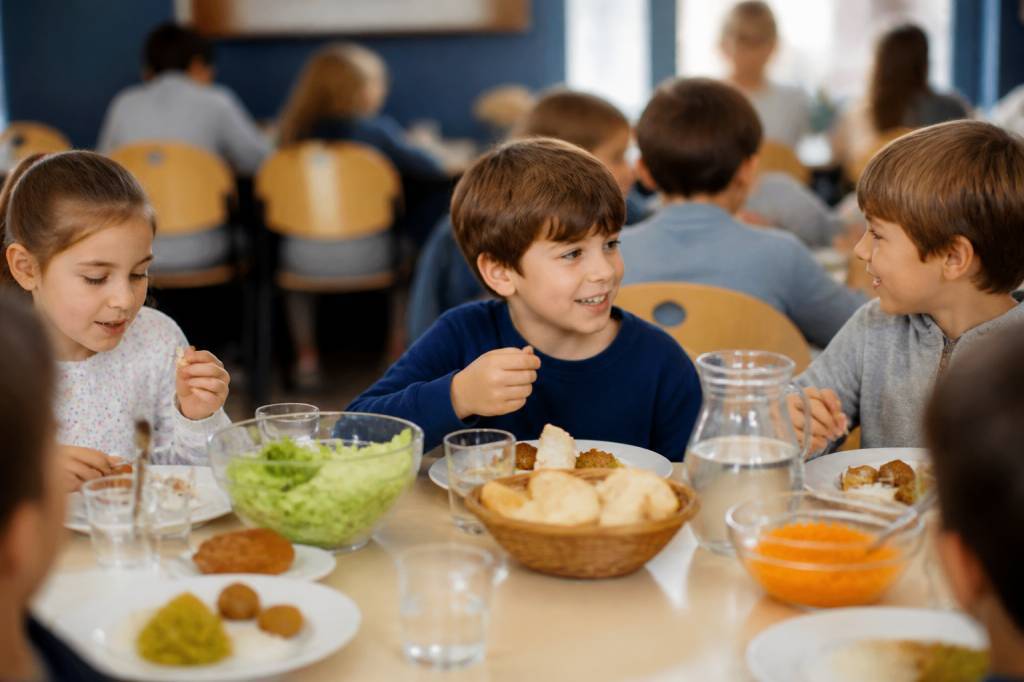
French school lunches are more than a midday meal. They are a mirror of regional identity, national values, family habits, and the country’s deep respect for food as part of daily life. In many places, lunch at school is not treated as a rushed break between classes, but as a structured and meaningful moment. The menu, the pace, the ingredients, and even the social atmosphere all reveal something important about how France sees cuisine, education, and community.
For visitors, the French approach to school meals may seem surprisingly serious. For French families, however, it is simply part of a larger cultural logic: children should eat well, learn to appreciate flavor, and develop balanced habits early on. This idea is rooted in the belief that food is not only fuel, but also a cultural experience. As a result, school lunches become a small but revealing expression of French life.
Food as a cultural lesson
In France, meals are often understood as moments of education. This does not only mean nutrition lessons in the classroom. It also means learning how to sit at a table, how to taste different ingredients, how to wait for each course, and how to respect the rhythm of eating. School lunches help children absorb these social codes from an early age.
Rather than serving lunch as a quick fast-food style break, many French schools encourage a more orderly and composed mealtime. Children may sit together, use cutlery properly, and experience a menu that resembles a home-cooked meal more than cafeteria food in other countries. The structure reflects a broader cultural value: mealtime is worth slowing down for.
This attitude also teaches children that food has meaning beyond convenience. A meal can communicate local produce, seasonal rhythms, and family traditions. In this way, the school can become a place where children encounter the culture of their region through what is on the plate.
Regional identity on the menu
France is known for its strong regional diversity, and school lunches often reflect that variety. The country’s geography has shaped its agriculture, and local ingredients naturally influence what children eat. In coastal areas, fish appears more often. In mountainous regions, cheese and hearty dishes can be more common. In the south, vegetables, olive oil, and Mediterranean flavors may be more visible.
This regional variety makes school lunches a kind of cultural map. A child in Brittany may grow up eating dishes that feel very different from those served in Provence or Alsace. The ingredients tell a story about what grows nearby, what local families traditionally cook, and what kinds of foods are familiar in the area.
Even when menus are standardized by municipal rules or national guidelines, local interpretation remains important. School catering services often work with seasonal and regional produce, which allows meals to keep a local character. This helps children understand that French cuisine is not one fixed tradition, but a collection of many culinary identities.
Seasonality and respect for ingredients
One of the clearest ways French school lunches reflect local culture is through seasonality. French food culture places great importance on eating ingredients at the right time of year. This respect for seasonal produce is visible in school meal planning, where menus may change according to what is fresh and available.
In autumn, root vegetables, squash, and apples may appear more often. In spring, lighter salads, green vegetables, and early fruits become more common. In summer, meals may feature tomatoes, courgettes, peaches, or other warm-weather produce. This seasonal rhythm encourages children to associate food with nature and local agriculture.
Seasonality also connects school lunches with nearby farmers and food supply chains. When schools buy local produce, they support regional economies and reduce the distance food travels before reaching the table. This reinforces the idea that the lunch served to a child can be connected to the land where they live.
Tradition, taste, and education
French food culture has long valued taste as something to be developed. Children are not expected to like everything immediately. Instead, they are gradually introduced to a wide range of flavors, textures, and dishes. School lunches support this process by exposing students to vegetables, cheeses, grains, legumes, and proteins that may be unfamiliar at first.
This practice reflects a cultural belief that taste is learned. The school environment can therefore shape future habits by encouraging curiosity rather than rejecting unfamiliar foods. In many French schools, children may be invited to try a small amount of a dish before deciding whether they like it. This gentle approach helps build openness and patience.
For families, this matters because lunch is part of education, not just childcare. It helps create continuity between the values taught at home and the habits encouraged at school. This is one reason school lunches are taken so seriously in France: they are part of forming the citizen as well as feeding the child.
The social meaning of the lunch break
School lunch in France also reflects social culture. The meal break is not only about consuming food; it is about sharing a moment with others. Sitting together, speaking calmly, and taking time to eat are all part of the experience. This social dimension teaches children that meals are communal events.
That shared aspect is important in a country where the table has long held cultural significance. In French life, eating together is often associated with conversation, belonging, and mutual respect. School lunches introduce these ideas early, making the cafeteria or dining hall a place where social habits are learned.
Meals at school can also help normalize diversity. Children from different backgrounds, neighborhoods, and family traditions meet around the same table. Even if the food is standardized, the act of eating together can create a sense of civic unity. This is one of the subtle ways school lunches reflect local and national culture at once.
Local values and national identity
French school lunches also reflect a broader national commitment to food quality and cultural continuity. The French state has often treated school meals as a matter of public interest, not private preference. This means schools may follow nutritional standards, sourcing rules, and meal structure guidelines that aim to preserve quality and balance.
At the same time, local communities retain influence over how these standards are implemented. City governments, school caterers, and local suppliers help shape what children actually receive. The result is a system that balances national expectations with local realities.
For readers interested in the educational side of this culture, this french school perspective helps explain why lunch is often treated as part of the school mission rather than an afterthought. The meal reflects a model of education that values development in every sense: physical, social, and cultural.
Classic dishes and everyday familiarity
Many school lunches in France include dishes that feel familiar to children because they resemble home cooking. Simple roasted chicken, vegetable gratins, pasta with sauce, lentils, rice dishes, fish with vegetables, or quiches can all appear on menus. These meals are usually designed to be balanced, but they also echo the comfort and simplicity of French domestic cuisine.
This familiarity matters because it creates a bridge between school and family life. Children may recognize ingredients or flavors from meals eaten at home, while also being introduced to new versions or combinations. This continuity supports the feeling that food is part of everyday culture, not an isolated institutional service.
Some regions may also bring local specialties into school menus. Depending on where a child grows up, they may encounter cheese-based dishes, particular soups, regional pastries, or local vegetables. These small touches allow a school lunch to feel rooted in place.
Dietary rules, change, and modern culture
French school lunches are not frozen in the past. They continue to evolve as French society changes. Public discussions about nutrition, sustainability, food waste, and inclusion have influenced how schools plan meals. Vegetarian options are more common than before, and many communities are paying closer attention to organic produce and eco-friendly sourcing.
These changes still reflect local culture because they show how France adapts tradition rather than abandoning it. The underlying principles remain visible: quality matters, children should be respected as diners, and food should have both nutritional and cultural value. The modern menu may look different from decades ago, but the social meaning of lunch remains powerful.
In some places, schools also work to accommodate dietary needs and cultural diversity. This may include providing alternatives or carefully planned menus that reflect the realities of contemporary French life. In this sense, school lunches reveal not only heritage, but also the ongoing negotiation between tradition and modernity.
Why the pace of lunch matters
Another striking feature of French school lunches is the pace. The meal is often given enough time to be enjoyed properly, rather than being compressed into a few hurried minutes. This slower rhythm sends a cultural message: eating deserves attention.
That rhythm is important because it changes how children experience food. They are less likely to see lunch as an interruption and more likely to see it as an essential part of the day. This can influence long-term attitudes toward eating, helping students develop habits that value moderation, structure, and enjoyment.
The pace also reinforces the idea that school is not only about academic performance. It is about forming balanced human beings. Lunch becomes one of the places where this philosophy becomes visible in everyday practice.
Family expectations and shared culture
French families often expect schools to support food education. Parents may care about the quality of ingredients, the balance of the menu, and the messages children receive about eating. This shared expectation connects households and schools through a common cultural understanding.
In many families, lunch is also a topic of conversation. Children may discuss what they ate, what they liked, and what they did not enjoy. These conversations extend the school’s influence into the home. Over time, they help form a shared language around food, one that includes local products, seasonal habits, and social etiquette.
Because of this, school lunches are more than a service. They are part of the social fabric. They teach children what a meal can look like in their community, what kinds of ingredients are valued, and how food links them to the place where they live.
A window into French everyday life
Looking closely at French school lunches reveals a great deal about local culture. They show a country that values structure, flavor, seasonality, and community. They reflect regional agriculture, national food traditions, and the continuing importance of shared meals. They also show how education can extend beyond books and classrooms into the everyday act of eating.
What makes this especially interesting is that school lunches operate quietly. They do not always attract attention outside France, yet they shape habits, memories, and expectations for millions of children. Through the lunch tray, the dining hall, and the shared table, French schools pass on a cultural legacy that is both practical and symbolic.
For anyone trying to understand French culture, the school lunch offers a surprisingly rich starting point. It is there, in the vegetables, the cheese, the fruit, the slower pace, and the careful planning, that local values become visible in a simple daily meal.