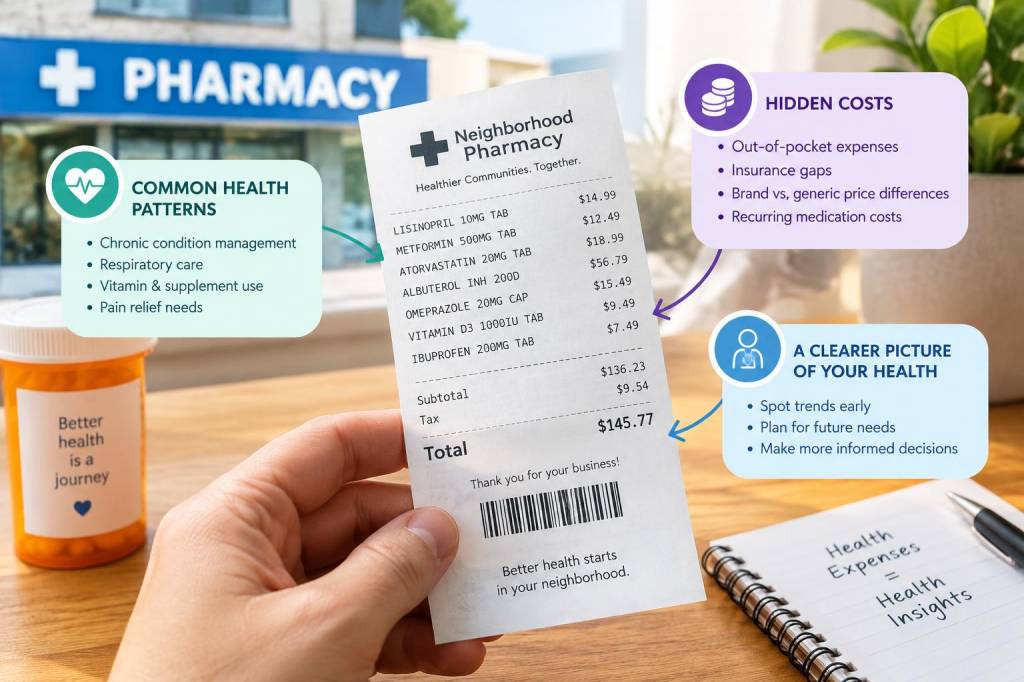
I started paying attention to pharmacy receipts for a very ordinary reason: I wanted to understand where my money was going. What I expected was a boring list of vitamins, pain relief tablets, a packet of plasters, and the occasional impulse purchase near the counter. What I did not expect was that those scraps of paper would begin to look like a map of everyday health. Over time, I noticed patterns that felt surprisingly human: winter colds, spring allergies, stress-related purchases, recurring self-care habits, and a steady trail of hidden costs that never seem dramatic on their own but add up in quiet, persistent ways.
A pharmacy receipt is small, but it is also a record. It captures a moment when someone decided they needed relief, prevention, reassurance, or convenience. When I read my own receipts closely, I started to see not just products, but behavior. I could almost hear the rhythm of ordinary life inside those printed lines: one week for a sore throat, another for hay fever, another for a child’s fever reducer, another for a late-night purchase of electrolyte sachets after a rough day. A receipt may look dull at first glance, yet it can reveal a lot about common health patterns in a neighborhood and the costs we often overlook.
What pharmacy purchases say about seasonal health habits
The first pattern I noticed was seasonal, and it was impossible to miss once I began looking for it. In colder months, receipts often shifted toward cough syrup, throat lozenges, decongestants, paracetamol, and tissues. In warmer months, the mix changed again: antihistamines, sunscreen, insect bite creams, and after-sun products started to appear more often. This is not just a shopping quirk. It reflects the way local illness patterns move through a population in waves, shaped by weather, indoor crowding, pollen counts, and travel.
In practical terms, a pharmacy receipt can be a tiny local health bulletin. If I see many items related to colds and flu in a short span, I know that respiratory illness is circulating. If allergy products suddenly dominate, I can guess that pollen levels are high or that people are struggling with a particular seasonal trigger. Even when I only have my own receipts, the shifts are revealing. My purchases begin to mirror the invisible calendar of common ailments, and I realize that many of us are responding to the same environmental pressures at roughly the same time.
The hidden economics of “small” purchases
One of the most striking things about pharmacy spending is how rarely it feels large in the moment. A box of pain relief tablets, a nasal spray, a packet of cough drops, a few plasters, and a bottle of cough syrup can each seem affordable. Yet receipts show how quickly these “minor” items accumulate. The total can surprise me, especially when I compare it with how ordinary the purchase felt at checkout.
This is where the hidden cost becomes interesting. Health spending is often discussed in terms of major expenses like prescriptions, insurance, or doctor visits, but ordinary over-the-counter purchases can quietly absorb a meaningful share of a household budget. I have noticed that many pharmacy receipts contain products bought for reassurance as much as for treatment. A second bottle of vitamins, an extra pack of tests, a premium lip balm, or a branded version of a generic medicine may offer psychological comfort, but each choice nudges the total upward.
What looks like a simple transaction often contains several layers of cost:
- Immediate cost, which is what I pay at the counter.
- Repeat cost, which appears when the same item has to be bought again after a few days or weeks.
- Replacement cost, which comes from products I already own but cannot find when I need them.
- Opportunity cost, which is the money spent on convenience rather than on a more durable solution.
- Emotional cost, which shows up when I buy reassurance because I feel uncertain or anxious.
Once I started reading receipts through that lens, I became much more aware of how often “small” health purchases are actually part of a larger pattern of routine spending. They do not feel like luxuries, but they are still decisions shaped by habit, fear, urgency, and the desire to feel better quickly.
Common health patterns hiding in plain sight
Receipts also reveal something about the kinds of discomfort people are willing to manage on their own. I see a lot of products for headaches, stomach upset, allergies, skin irritation, sleep problems, and minor injuries. These are the everyday conditions that rarely make headlines but affect people constantly. They are the low-level health frictions that sit in the background of work, parenting, commuting, and social life.
What fascinates me most is that many of these purchases are not for dramatic illness. They are for maintenance. People buy eye drops because screens dry out their eyes. They buy magnesium supplements because stress affects sleep. They buy antacids because meals are irregular. They buy blister plasters because their shoes were a bad choice for a day that had too much walking in it. The receipt becomes a record of adaptation, showing how people keep going through small discomforts rather than waiting for a serious problem.
I also notice that certain products appear together, which tells its own story. When I see pain relief tablets alongside hot water bottles, cough remedies alongside tissues, or digestive aids alongside rehydration drinks, I can imagine a household responding to a short-lived wave of discomfort. These combinations are not random. They reflect common routines for coping with minor illness at home, often before anyone thinks about seeing a clinician.
What I learned from comparing brand choices and generic options
Another detail that stands out on receipts is the difference between branded products and generic equivalents. I have seen this pattern in my own spending, and it is one of the clearest windows into hidden cost. A branded painkiller may sit next to a generic version with a much lower price, yet I know many people still reach for the brand they recognize. That choice is not always irrational. Sometimes it is based on trust, familiarity, packaging clarity, or past experience. But it is also a reminder that health shopping is not purely scientific; it is emotional and cultural too.
I have caught myself doing this many times. I might choose a familiar name because I do not want to think too hard while standing in a queue, or because I associate it with reliability. A receipt then quietly records that preference. Over several months, that habit can become expensive. The data are not dramatic, but they are consistent: small brand premiums repeated across many transactions can make a noticeable difference.
When I look back at my receipts, I can usually spot moments where I paid extra for convenience, comfort, or confidence. That does not mean those choices were wrong. It means they were human. The pharmacy is one of the few places where price, fear, and need meet so closely, and receipts expose that tension very clearly.
How neighborhood patterns emerge from individual purchases
Even though I only see my own receipts, I often imagine what a full neighborhood pattern would look like if all those purchases were aggregated. A local pharmacy sees the pulse of an area in a way that few other businesses can. It receives the cough remedies of school families, the blood pressure supplies of older adults, the skincare products of teenagers, the pregnancy tests of people waiting nervously for answers, and the sleep aids of exhausted workers trying to reset their nights.
If I were to group receipts by time of year, age group, or household type, I suspect I would find clear clusters. Families with young children likely buy more fever reducers and calamine lotion. Office workers may lean toward eye drops, headache tablets, and energy supplements. Older customers may show steadier purchases of long-term health essentials. People caring for others probably have the most varied receipts of all, because they are shopping for several bodies and several kinds of discomfort at once.
This is what makes pharmacy receipts scientifically interesting to me. They are not medical records, but they are behavioral traces. They show demand, stress, routine, prevention, and improvisation. They also reflect local context: climate, commuting habits, housing conditions, work patterns, and access to care all influence what ends up in the basket.
What receipts cannot tell me, and why that matters
Of course, receipts have limits. They do not tell me who actually used the product, whether it worked, whether the condition was serious, or whether the purchase replaced a doctor visit. They do not show the context behind the transaction, and they certainly do not reveal every health concern. A receipt is partial evidence, not a diagnosis.
That limitation matters because it keeps me honest. It reminds me not to overread every box or bottle. Still, even with those limits, receipts are useful. They show what people are willing to spend money on quickly, quietly, and repeatedly. They reveal which symptoms are common enough to feel routine. They expose where convenience wins over planning. They also hint at the gap between what people need and what they have time to address.
When I became more attentive to these small paper trails, I stopped thinking of pharmacy visits as isolated errands. I started seeing them as snapshots of health in motion. One receipt might show a family getting through a cold weekend. Another might show a person preparing for a trip, a week at work, or a season of allergies. Another might expose an expense they never planned to make but needed anyway. Taken together, these fragments create a picture of everyday vulnerability, resilience, and the cost of staying well in ordinary life.
| Receipt signal | Possible pattern | What it can suggest |
|---|---|---|
| Cough remedies, tissues, throat lozenges | Winter respiratory season | Shared exposure, indoor crowding, changing weather |
| Antihistamines, eye drops, nasal sprays | Pollen or allergy flare-up | Seasonal trigger, local environmental irritation |
| Pain relief, heat packs, muscle rubs | Minor aches, strain, overuse | Work fatigue, exercise soreness, daily physical stress |
| Digestive aids, rehydration products | Short-term stomach upset | Diet changes, minor illness, travel disruption |
| Sleep aids, calming supplements | Stress and sleep difficulty | Busy schedules, anxiety, irregular routines |
Since I began noticing these details, I carry my receipts a little differently in my mind. They are no longer just proof of purchase. They are small, practical records of what people worry about, what bodies ask for, and what it costs to respond in real time. Every line on that paper feels more revealing than it used to, and I keep finding new stories in the most ordinary transactions.