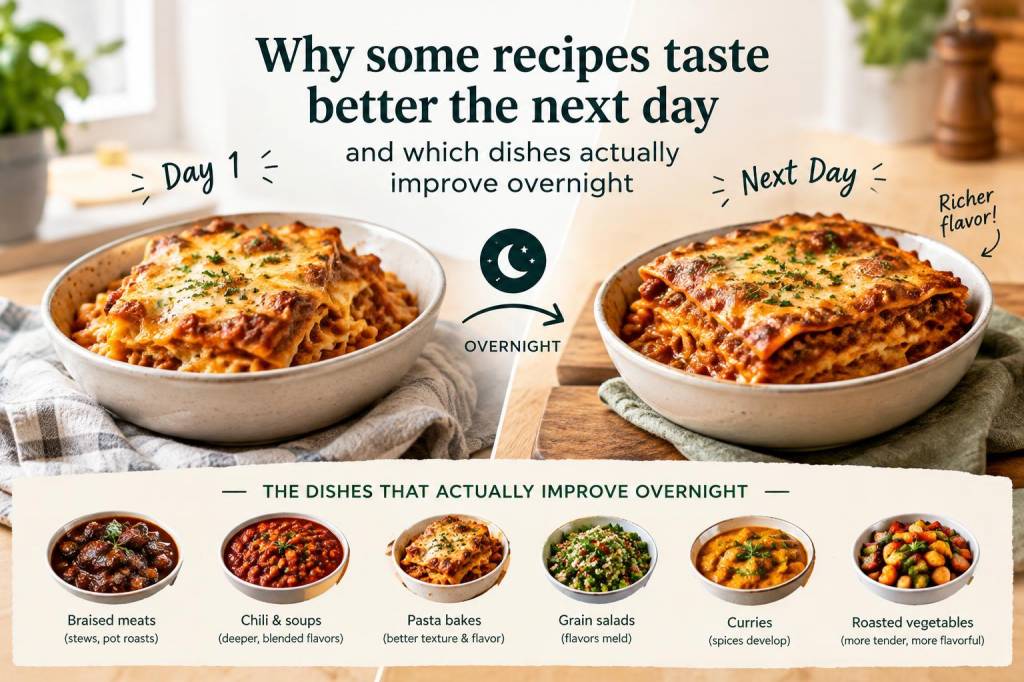
I have lost count of how many times I have opened the fridge, reached for last night’s leftovers, and felt pleasantly surprised by a dish that seemed even more interesting after a night of rest. A tomato sauce that tasted sharp and fragmented yesterday suddenly feels round and deep. A stew that was good at dinner becomes rich and unified by lunch. A curry seems smoother, a chili feels fuller, and even a simple grain salad can seem more coherent after a few hours in the cold.
That experience is not imagination, at least not entirely. A surprising amount of cooking is still happening after you switch off the heat. Flavors keep mingling, ingredients keep absorbing liquid, and aromas change as compounds break down or settle into a new balance. When I started paying closer attention to leftovers instead of treating them as second-class meals, I realized that some dishes are almost designed to improve overnight, while others lose their charm very quickly.
What changes after a dish rests
Food does not stop evolving when it leaves the stove. In many dishes, especially those with sauce, fat, starch, or strong seasonings, time allows ingredients to move toward a more integrated flavor profile. Salt spreads more evenly through the food. Spices hydrate and soften. Aromatic compounds from garlic, onion, herbs, and spices mingle with fats and liquids, which helps them spread through every bite instead of sitting in isolated pockets.
Temperature matters too. When food cools, fat solidifies and then slowly redistributes once reheated. That can change both texture and flavor perception. At a hot serving temperature, some volatile aromas rush upward quickly and vanish just as fast. After resting, a dish can taste calmer and more balanced because those aromas are no longer so aggressive. I often notice this with tomato-based sauces: the sharpness seems less dominant, and the sweetness and savoriness become easier to notice.
Starches also play a role. Rice, pasta, potatoes, and beans absorb moisture over time, which can shift texture and help sauces cling more effectively. This is one reason a baked pasta or bean stew can feel more satisfying on day two. The components are no longer separate; they have had time to get acquainted.
Why some flavors seem stronger on day two
In very fresh food, individual ingredients can shout over one another. A soup may taste like onion, then garlic, then tomato, then pepper, all in separate bursts. After resting, those same ingredients can seem to “merge,” creating something that feels more complete. I think of it less as flavor getting stronger and more as flavor getting organized.
Fat is especially important here. Many flavor molecules dissolve well in fat, and fat acts as a carrier that spreads aroma through a dish. When a recipe includes olive oil, butter, coconut milk, cream, cheese, or rendered meat fat, it often has more overnight potential than a very lean dish. The fats help hold onto flavor and release it gradually when reheated.
Another quiet factor is acidity. Tomato, vinegar, wine, citrus, and other acidic ingredients can taste bright and slightly aggressive when a dish is freshly made. After some rest, that edge often softens. This is especially noticeable in sauces, braises, and pickled preparations. The acid does not disappear, but it becomes part of a wider balance instead of dominating every mouthful.
Dishes that usually improve overnight
Over time I have built a small mental list of foods that almost always reward patience. These are the dishes I am happiest to make in advance because they seem to repay me with better flavor the next day:
- Stews and braises, especially beef stew, lamb ragout, and slow-cooked chicken dishes
- Chili, whether meat-based or bean-based
- Curries, particularly those with coconut milk or long-simmered spice blends
- Tomato sauces, from simple marinara to hearty meat sauces
- Soup with legumes, such as lentil soup, split pea soup, or minestrone
- Grain salads, including couscous, farro, bulgur, and quinoa salads with dressing
- Marinated dishes, where the sauce is meant to soak into the ingredients over time
- Casseroles and baked pasta, where layered flavors settle and meld
These dishes often contain enough moisture and enough seasoning to benefit from a pause. They are also structured in a way that allows flavors to move through the entire dish instead of staying trapped in a single ingredient. A chili with beans, tomatoes, spices, and fat has many pathways for flavor to spread. That is why a second-day bowl often tastes less like separate components and more like one unified meal.
I also find that certain baked dishes, such as lasagna, moussaka, and shepherd’s pie, can become easier to cut and serve after resting. In those cases, the overnight wait does not only improve flavor; it improves texture and structure. A freshly baked lasagna may feel loose and molten, while a rested one slices neatly and presents each layer more clearly.
Dishes that often get worse overnight
Not every recipe benefits from time. Some foods are at their most vibrant immediately after cooking, and waiting can flatten their appeal. Delicate herbs lose brightness. Crisp vegetables soften. Fried coatings absorb moisture. Seafood can become less appealing very quickly. A dish that relies on contrast, crunch, or freshness often loses its magic if it sits too long.
These are the foods I usually eat without delay if I want them at their peak:
- Fried foods, such as fries, schnitzel, tempura, and crispy chicken
- Fresh salads, especially those with tender greens
- Seafood, unless it is intentionally cured, marinated, or transformed into a chilled salad
- Herb-heavy dishes with basil, dill, parsley, or mint, when freshness is central to the flavor
- Simple roasted vegetables that depend on crisp edges and immediate warmth
- Egg dishes like soft scrambled eggs, which are texture-sensitive
Creamy dishes can go either way. Some, like Alfredo-style pasta or custard-based desserts, are pleasant later but rarely better. Others, such as a thick gratin or a rich quiche, can hold up quite well. Texture is often the deciding factor. If a dish depends on being crisp, airy, or tender in a very specific way, overnight storage may dull its charm.
What science says about aroma and rest time
One reason leftovers can taste different is that flavor is not just taste. Much of what we call flavor is actually aroma, and aroma depends on volatile compounds reaching your nose. While food is hot, those compounds escape quickly. As food cools and rests, some aromas mellow, while others integrate more gently with the overall dish. That shift can make food seem more balanced and less chaotic.
Another part of the story is chemical change. Proteins, starches, sugars, acids, and fats continue interacting after cooking. In a stew or sauce, these interactions can create a fuller perception of depth. In a tomato sauce, for example, the brightness of the tomato, the sweetness from onions, the savoriness from meat or mushrooms, and the richness from oil can all become more cohesive after a period of rest.
There is also a practical sensory reason leftovers may seem better: your palate has time to reset. When I eat a dish fresh from the stove, I may be focused on heat, texture, and immediate intensity. The next day, the dish is cooler, calmer, and easier to evaluate. That can make subtler notes stand out in a way they did not before.
| Dish type | Overnight change | Reason it improves or declines |
|---|---|---|
| Chili | Often improves | Spices, beans, tomatoes, and fat blend into one richer flavor |
| Tomato sauce | Often improves | Acidity softens and savory notes become more integrated |
| Fried food | Usually declines | Steam softens the coating and removes crispness |
| Fresh salad | Usually declines | Greens wilt and dressing overwhelms delicate textures |
| Stew | Often improves | Long-simmered flavors meld and thicken together |
| Herb salad | Usually declines | Fresh herbs lose brightness and aroma |
Storage matters as much as the recipe
Whether a dish improves overnight also depends on how it is stored. A tightly covered container in the refrigerator keeps moisture in and prevents the food from picking up stray odors. Wide, shallow containers cool food faster and more evenly, which helps preserve texture and reduces food safety risks. I have learned that a curry left in a deep pot cools more slowly and can sometimes become uneven in both temperature and texture the next day.
Reheating also changes the result. A stew reheated gently on the stove often tastes better than one blasted in a microwave until parts are boiling and others are still cold. Gentle heat helps preserve texture and avoids driving off too many of the aromatics that made the dish appealing in the first place. For pasta, adding a splash of water or stock before reheating can restore some silkiness. For rice dishes, a little steam works wonders.
Some dishes should be improved intentionally before storage. A soup that tastes slightly underseasoned when first cooked may be perfect tomorrow after the salt and spices settle in. A grain salad may benefit from a final drizzle of dressing before chilling, since grains keep absorbing flavor. When I cook ahead, I often think less about whether a dish tastes finished right now and more about whether it has room to become finished later.
My own rule of thumb in the kitchen
I like to ask one simple question before deciding whether something should be eaten immediately or saved for tomorrow: does this recipe depend more on freshness or on harmony? If the answer is freshness, I serve it right away. If the answer is harmony, I let it rest. That little distinction has changed the way I cook and plan meals.
It has also changed the way I feel about leftovers. A second-day meal is not a compromise by default. Sometimes it is a more complete version of the same idea, with sharper edges softened and stray flavors brought into alignment. I have even started making certain dishes intentionally on a day when I do not need them yet, because I know they will be more rewarding after a night in the fridge.
The next time you cook a pot of chili, a tomato sauce, or a slow stew, try tasting it again after a night of rest. Pay attention to what has changed: the sweetness, the salt, the aroma, the texture, the way each ingredient now seems to belong. That small comparison can turn an ordinary leftover into a tiny kitchen experiment, and for me, that is part of the fun of cooking.