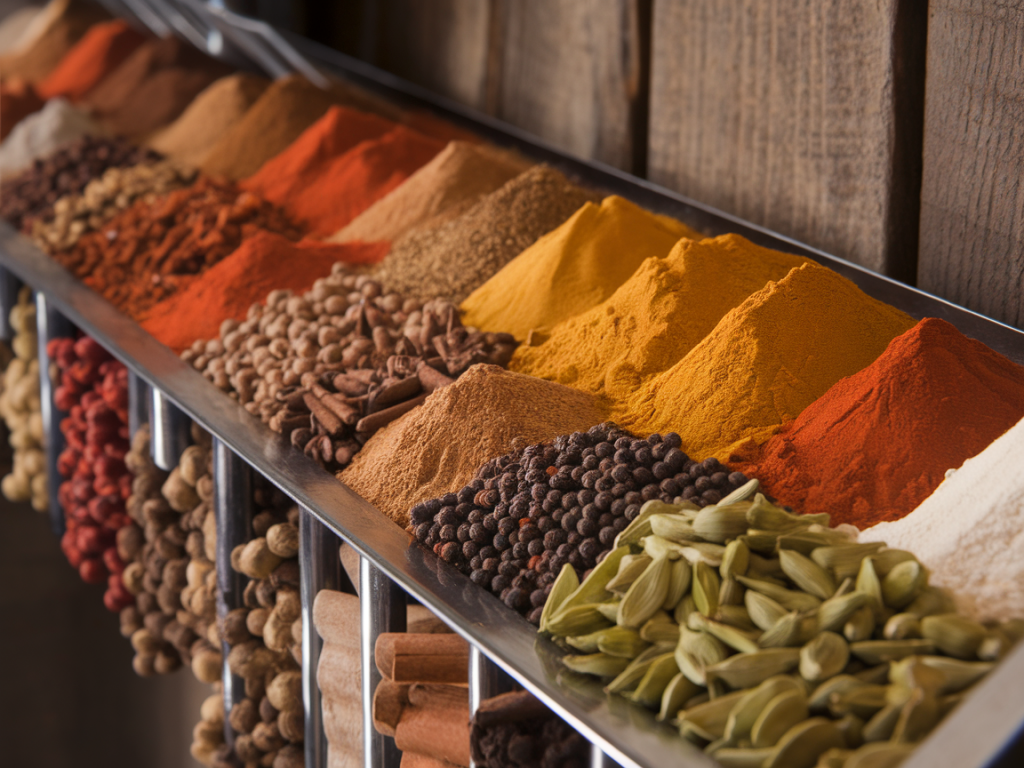
Opening my kitchen cupboards feels a bit like opening a travel journal. The jars and tins on my spice rack are souvenirs of meals, conversations, and small experiments that have shaped the way I cook and think about taste. Over the years I’ve noticed that a spice rack does more than season food—it reflects migration, trade, climate, class, memory and even identity. If you look closely at what people keep within arm’s reach in the kitchen, you can read a map of cultural priorities.
What a spice rack reveals about local culture
At first glance a spice rack seems purely functional. But once you start asking questions—why that dried herb and not this one? why more chili than cinnamon?—patterns emerge.
- History and trade: The presence of spices like cumin, turmeric, or black pepper often points to historical trade routes and colonial ties. In Britain, the popularity of curry powders reflects centuries of interaction with South Asia. In coastal Mediterranean towns you’ll find more za’atar, oregano and preserved lemons, echoing centuries of local produce and trade across the sea.
- Climate and preservation: Spices that are strong and drying—dried chiles, bay leaves, cumin—are common in regions where preservation mattered before refrigeration. Spices acted as both flavor and function.
- Socioeconomic signals: Historically, some spices (saffron, vanilla) were expensive luxury items. A household where these appear often signals festive cooking or a tradition of celebration. Conversely, the everyday use of cheaper ground spices tells a story of daily practicality.
- Immigration and fusion: A spice rack that mixes ras el hanout with American-style barbecue rub shows how food cultures intermingle. Those blends are often the most interesting to cook with because they reflect lived hybrid identities.
- Personal memory: Single jars can hold huge emotional meaning—a bottle of smoked paprika bought on holiday in Spain, a dried herb gifted by a friend. That personal geography is as telling as larger cultural patterns.
Common questions people ask about spices (and my answers)
“How long do spices last?” Most whole spices (peppercorns, cinnamon sticks, cumin seeds) keep flavour longer—think two to four years—while ground spices lose potency after about six months to a year. Store them in a cool, dark place away from heat and light to extend their life.
“Should I buy blends or single spices?” I usually buy single spices and blend them myself. It gives more control and lets me tweak recipes. But blends are useful for convenience and as a way to learn new flavour profiles—good ones I’ve used include Schwartz’s Garam Masala and Penzeys for high-quality single spices.
“What’s the easiest way to plate a tasting shelf?” Start small and rotate. Keep basics—salt, black pepper, smoked paprika—within reach, and a rotating set of six or so curiosities I’m currently exploring. That gives a balance between utility and discovery.
How to build a tasting shelf for curious cooks
Creating a tasting shelf is like curating a personal museum. The goal is to make a small, approachable selection that encourages experimentation. Here’s how I go about it.
- Decide your focus: Do you want global exploration, region-specific depth, or technique-based spices (smoking, pickling)? I often alternate: one month I explore North African spice blends, the next I dive into Scandinavian preserved-flavour techniques.
- Choose your container style: Clear glass jars are great for seeing contents; amber jars protect from light. Uniform jars give a tidy look and make it easier to read labels. I like recycled Weck jars for their usefulness and charm.
- Pick a base set (the essentials):
- Salt (sea salt and flaky finishing salt)
- Black peppercorns
- Smoked paprika
- Ground cumin
- Turmeric
- Dried oregano
- Add six curiosities: These should be things you don’t use every day but are fun to test. My current picks: sumac, ras el hanout, Korean gochugaru, Aleppo pepper, fennel pollen, and toasted sesame seeds.
- Label and date: Always label jars with the spice name and the date you opened or bought them. A simple sticker label saves future guesswork and helps rotate stale stock.
- Set a tasting ritual: Each week I pull one curiosity off the shelf and try it in two small ways: once in a dish I know well (to see how it shifts the familiar), and once in a simple experiment (e.g., infused oil or roasted veg). Keep notes in a small notebook or a note app.
A simple table: spices, typical uses, and cultural notes
| Spice | Typical uses | Cultural note |
|---|---|---|
| Cumin | Curries, stews, spice blends | Staple across Middle Eastern, South Asian, Latin American cuisines |
| Turmeric | Curries, golden milk, marinades | Anti-inflammatory associations; key in South Asian cooking |
| Sumac | Salads, za’atar, dressings | Citrusy tang used in Levantine cuisines |
| Smoked paprika | Stews, rubs, roasted veg | Popular in Spanish and Portuguese cooking; adds smoky depth |
| Fennel seeds | Breads, sausages, digestive tea | Used in Mediterranean and South Asian sweet and savoury dishes |
Taste-first experiments to try
Here are three tiny experiments that will teach you the character of a spice quickly:
- Oil infusion: Warm 100 ml of neutral oil (like grapeseed) with a tablespoon of the spice over low heat for 10 minutes, cool and strain. Taste an olive on its own, then with a drizzle of the infused oil.
- Toast and sniff: Toast whole seeds or peppercorns in a dry pan for 1–2 minutes until fragrant. Smell before and after; toasting often unlocks deeper, sometimes caramel, notes.
- Salt-side test: Sprinkle a pinch of the spice on plain cooked rice or a neutral cracker and compare to the same item with salt. This helps you detect subtle acidity, smokiness or floral notes.
Where I buy spices (and why)
I like a mix of sources: local independent grocers and markets for freshness and stories; reputable shops like Penzeys or Spice Mountain for bulk and specialty items; small online producers for single-origin spices. Farmers’ markets sometimes have freshly harvested herbs and wild-foraged ingredients—those feel like treasure hunts.
One tip: don’t be seduced by enormous offers on pre-ground supermarket spice jars if you care about flavour. Whole spices from a trusted source will give you far better returns when you grind or toast them just before use.
Finally, remember that a spice rack is never finished. It’s a living collection that changes with travel, seasons, and the people you share meals with. Treat it as a conversation—between your past meals, your curious future experiments, and the wider cultural currents that brought each pinch of flavour into your kitchen.