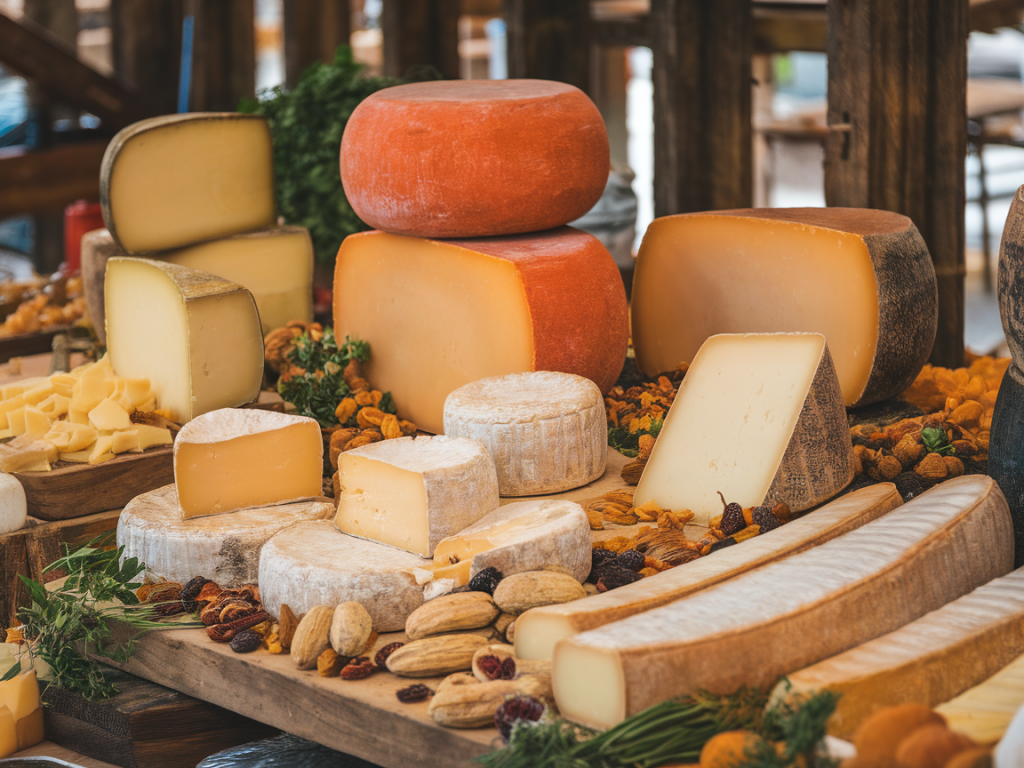
There’s a small thrill I get every weekend when I push through the canvas flap of a farmers’ market tent: the smell of fresh bread, the chatter of producers, and a table piled high with cheeses that look like little moons and sunbursts. But if you’re like me when I first started, those labels — raw milk, farmhouse, PDO — felt as cryptic as a foreign menu. Over time I learned to read the clues on a sticker and trust my tastebuds. Here are the practical bits I wish I’d known sooner to decode farmers’ market labels and truly taste artisan cheese like a local.
Start with the basics: what the main label terms mean
Labels are short because producers have limited space; they’re trying to signal the essentials. I keep a mental checklist of a few key words and what they usually imply:
- Raw milk — Milk that hasn’t been pasteurised. Expect more complex, sometimes funkier flavours. Raw cheeses are often aged at least 60 days (depending on local rules).
- Pasteurised — Milk heated to kill bacteria. Cheeses can be milder and more predictable.
- Farmhouse — Made on the farm where the milk was produced. Smaller batches, often seasonal and tied to the herd’s diet.
- Artisan — Handcrafted, smaller-scale production. Not a regulated term everywhere, but usually suggests care and attention to technique.
- PDO/PGI — Protected designations (European schemes) that link a cheese to a specific place and traditional method — think Manchego, Comté, or Roquefort.
- Grass-fed or pasture-raised — The animals’ diet was predominantly grass; this can affect the fat composition and flavour nuance of the cheese.
- Age/Affiné — How long the cheese has matured. Younger cheeses are softer and milk-forward; older cheeses tend to be firmer and more umami-packed.
Use the label to ask three quick questions at the stall
When I’m at a market I rarely spend more than 30–60 seconds reading a label before I chat with the maker or vendor. These three questions get you the most useful info fast:
- Where does the milk come from? If it’s the same farm, that says a lot about traceability and seasonality.
- Is it raw or pasteurised? That tells you about the likely intensity of flavour and texture.
- How long has it been aged? Age drastically alters taste — ask for the affineur’s (maturer’s) recommended tasting window.
Pro tip: vendors love to tell stories. If they mention specific herd names, creameries, or grazing pastures, it usually signals pride in craft rather than generic mass production.
Reading the small print: ingredients and certifications
Look beyond buzzwords. A label with a short ingredient list — milk, salt, cultures, rennet — is a good sign. If you see emulsifiers, anti-caking agents, or long chemical names, you’re likely looking at an industrial product rather than artisanal. Certifications like Organic, Red Tractor (UK), or specific PDO logos are useful cues for farming practices and provenance.
Here’s a quick table I find handy when I’m comparing two cheeses side by side:
| Label term | What it usually means |
|---|---|
| Raw milk | Untreated milk; complex flavour; often aged longer |
| Pasteurised | Heated milk; milder, safer for mass markets |
| Farmhouse | Made on-farm from that farm’s milk; seasonal |
| Artisan | Small-scale, handcrafted processes |
| PDO/PGI | Geographical and traditional method protected |
Taste like a local: how I approach a tasting
Tasting artisan cheese is a ritual I’ve refined. I take a methodical but relaxed approach — part curiosity, part appetite. Here’s my usual sequence:
- Look — Observe colour, rind, and texture. An orangey rind might hint at annatto or washed-rind ripening; a bloomy white rind suggests Brie-style mould.
- Smell — Don’t be afraid of funk. Cheeses carry aromas from lanolin, hay, mushrooms, or barnyard — many of which translate to deep flavours.
- Touch — Is it springy, crumbling, creamy? Texture tells you a lot about moisture content and aging.
- Taste — Take a small bite, let it sit on your tongue. Notice the first hit (milky, tangy), the body (creamy, crystalline), and the finish (salty, nutty, sharp).
I often cleanse my palate with plain crackers or apple slices between tastes — nothing too assertive. If I’m sampling with a vendor, I’ll ask for the cheese’s best pairing: they usually have a favourite honey, chutney, beer, or wine that accentuates the cheese’s character.
Pairings that bring out hidden notes
Pairing doesn’t have to be fussy. Here are simple matches I frequently recommend at markets:
- Soft, bloomy cheeses (Brie-style) — pair with a crisp apple, light honey, or a floral white wine like Chenin Blanc.
- Washed-rind cheeses (stinky but irresistible) — try with a robust ale or a slightly sweet cider to balance the savoury depth.
- Aged hard cheeses (cheddar, Comté) — pair with quince jam, nutty port, or a bold red like Cabernet Franc.
- Fresh cheeses (chèvre, ricotta) — pair with heirloom tomatoes, cracked pepper, or herbaceous olive oil.
Trusting your gut (and your vendor)
I’ve learned to prioritise vendors who offer small tastings and are open about production. A confident producer will tell you how a cheese changes through the seasons and won’t shy away from explaining why a batch tastes different one week to the next. If they’re protective of their process, that’s usually a good sign; if they deflect questions, be cautious.
If you’re buying for a dinner, ask for a mix of textures and ages: a soft starter, a tangy middle cheese, and a robust aged piece for the finale. I always label my purchases in the fridge with the date and any notes from the vendor — a tiny habit that helps me track what I loved and what I’d skip next time.
Storage and bringing cheese home from the market
How you wrap your cheese matters. I avoid cling film for anything I plan to eat within a week; instead I use beeswax wraps or the paper the vendor gives me, then a loose outer layer of foil. Keep cheeses cool and separated by type (don’t store strong blue with delicate bries). When you get home, let a cheese rest at room temperature for 30–60 minutes before serving — flavours bloom as it warms.
Market weekends have become my favourite way to discover cheeses I wouldn’t find in supermarkets. With a few label-decoding tools, a couple of friendly questions, and a willingness to taste something unfamiliar, you’ll start to recognise producers by their signatures — grassy notes from a summer herd, smoky hints from a charred wash, or the crystalline crunch of an aged cheddar. Above all, remember: cheese is meant to be enjoyed. Let curiosity lead, and your palate will thank you.