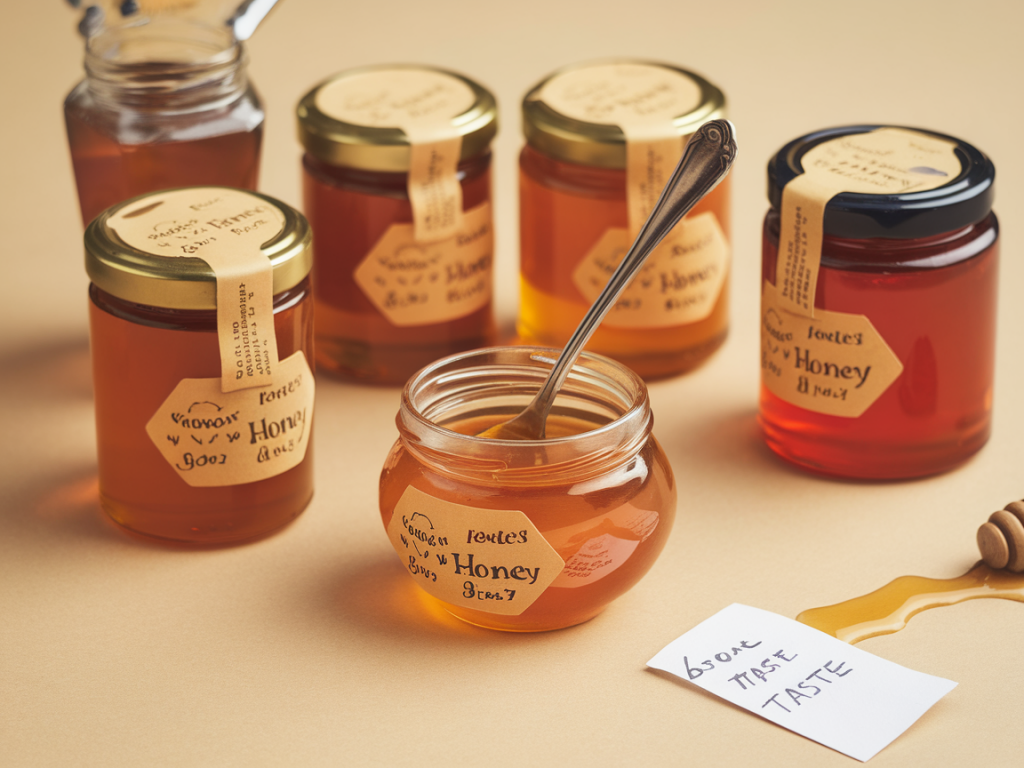
I’ve always been a little obsessed with small, everyday curiosities — and honey is one of those humble pantry items that quietly holds whole landscapes in a jar. Walk down any supermarket aisle or farmers’ market and you’ll notice: honey isn’t just “sweet.” It can taste floral, vegetal, caramelized, herbal, or even faintly smoky. I wanted to understand why honey varies so dramatically from place to place, and I also wanted to learn how to taste it properly so I could tell those differences apart. Here’s what I discovered — and how you can taste-test honey like a pro at home.
Why honey tastes different across regions
At its heart, honey is the concentrated, transformed nectar (and sometimes honeydew) that bees collect and then process back at the hive. But several interacting factors shape the final flavor:
Floral source (the biggest factor): Different plants produce nectars with distinct sugar compositions and aromatic compounds. Heather, orange blossom, clover, chestnut, eucalyptus, lavender — each imparts its own signature. Monofloral honeys (like lavender or orange blossom honey) come primarily from a single flower type and therefore have a pronounced, identifiable character.Regional “terroir”: Yes, honey has terroir. Soil chemistry, local microclimate, altitude, and surrounding plant communities influence nectar composition. Two honeys from the same species of flower can still differ if one grows in a coastal clay soil and the other in a dry, rocky upland.Bee species and behavior: The most common honeybee used for honey production is Apis mellifera, but subspecies and local bee health can influence how nectar is processed — enzymes added by bees change sugar ratios and aroma precursors.Processing and storage: Raw, unfiltered honey retains pollen, volatile aromatics, and tiny crystals that influence taste and texture. Commercially pasteurized and filtered honeys often taste flatter and more uniform. Age and storage conditions (heat, light exposure) also change flavor — some honeys darken and develop toffee-like notes over time.Honeydew vs. nectar honey: Honeydew honey (made from secretions of sap-sucking insects on trees) tastes richer and less floral than nectar honey — think malty, resinous, or woody. Examples include some forest honeys from Europe.Regional flavor snapshots
To help make sense of all this, I like thinking in regional flavour thumbnails. Here are some general tendencies — of course, there are many exceptions.
| Region | Typical Flavour Profile | Examples |
|---|
| Mediterranean | Herbal, aromatic, sometimes piney or thyme-like | Greek thyme honey, Spanish rosemary |
| New Zealand | Complex, medicinal, earthy (when Manuka) | Manuka (Leptospermum scoparium) |
| North America | Varied: light & floral (clover) to rich & buttery (wildflower) | Clover, wildflower blends |
| Central/Eastern Europe | Robust, often darker; chestnut or foresty | Chestnut, acacia (light and delicate) |
| Tropical | Fruity, bold, sometimes malty | Brazilian wildflower, Caribbean |
These are broad strokes meant to orient your palate. When I taste a new honey, I first try to guess the floral source and region, then compare that impression to the label (if there is one).
How to taste-test honey like a pro (at home)
Yes, you can create a small tasting ritual that’s informative and fun. I usually set aside 30–45 minutes for a proper tasting of three to five honeys.
Tools and setup: Use small, identical glass cups (clear glass is best), a spoon for each sample, water, and plain crackers or apple slices to cleanse the palate. Avoid strong-smelling foods beforehand (garlic, coffee).Room temperature matters: Slightly warmed honey releases more aroma, but too warm will flatten the scent. Keep honeys at room temperature and if a sample is crystallized, set the jar in a bowl of warm water until it’s pourable — don’t microwave.Look and texture: Pour a little into your glass and observe color and viscosity. Color can hint at flavor — lighter honey often tastes milder, darker honey tends to be stronger and more complex. Run a spoon through it to assess body: viscous, syrupy, or thin?Smell first: Hold the glass near your nose and inhale gently. Try to identify floral, fruity, woody, or spicy notes. Aromas give the clearest clues to floral source.Taste: Take a small sip just to coat the tongue. Let the honey rest in your mouth for a few seconds before swallowing to notice texture and the sequence of flavors: initial sweetness, mid-palate notes (floral, herbal, citrus, resinous), and finish (lingering bitterness, menthol, or caramel).Note the aftertaste: A long, pleasant finish is often a sign of complex honey. Some Manuka honeys, for example, leave a medicinal or almost earthy aftertaste that’s distinctive.Compare and record: Taste lighter honeys before darker ones to avoid palate fatigue. I keep a small notebook and jot down three words for aroma, texture, and finish — it’s a fun way to track discoveries.Taste vocabulary — simple words that help
Floral: reminds you of the scent of flowers (orange blossom, lavender)Herbal: thyme, rosemary, or chamomile-likeFruity: apple, citrus, stone fruitCaramel/toffee: cooked sugar or buttery notesMalt/woody: bread crust, roasted nuts, resinMedicinal/resinous: eucalyptus or Manuka-likeUsing consistent descriptors makes it easier to compare honeys and explain your preferences to a seller or friend.
Practical tips for buying and storing honey
Buy raw/local if you want terroir: Farmer’s markets and small-scale producers often sell single-source, minimally processed honey that shows regional character. UK foragers, for example, will often label “heather” or “wildflower” and you can taste the landscape.Check labels for treatment: “Raw” or “unpasteurised” generally means less processing. If a label lists “ultrafiltered” or “pasteurised,” expect a cleaner, more uniform flavor but less personality.Manuka: know what you’re buying: Genuine Manuka honey from New Zealand is often graded by UMF or MGO. Higher numbers correspond to stronger antibacterial markers and a more intense, medicinal flavor (brands like Manuka Health and Comvita are well-known).Store properly: Keep honey in a cool, dark cupboard in a sealed jar. Honey doesn’t go bad, but exposure to heat and light accelerates flavor change. If it crystallizes, gently warm the jar in a bowl of hot water.Pairing and using honey to highlight flavor
Part of the joy of tasting honey is discovering how it plays with other foods. A few pairing ideas I love:
Light, floral honeys (acacia, orange blossom) with fresh yogurt or soft cheeses like ricotta.Darker, herbaceous honeys (thyme, chestnut) with aged cheeses or drizzled over roasted vegetables.Manuka for a bold finish on ginger tea or in marinades where a hint of umami is welcome.Use a mild clover or wildflower honey when baking so you don’t overwhelm a recipe.Tasting honey is a little like reading a postcard from a landscape: each jar carries a note of the plants, soil and care that created it. Once you start paying attention, routine breakfasts and tea breaks become small adventures. If you want, tell me which honeys you’ve tasted and I’ll help you decode their notes — I love comparing tasting notes with other curious minds.