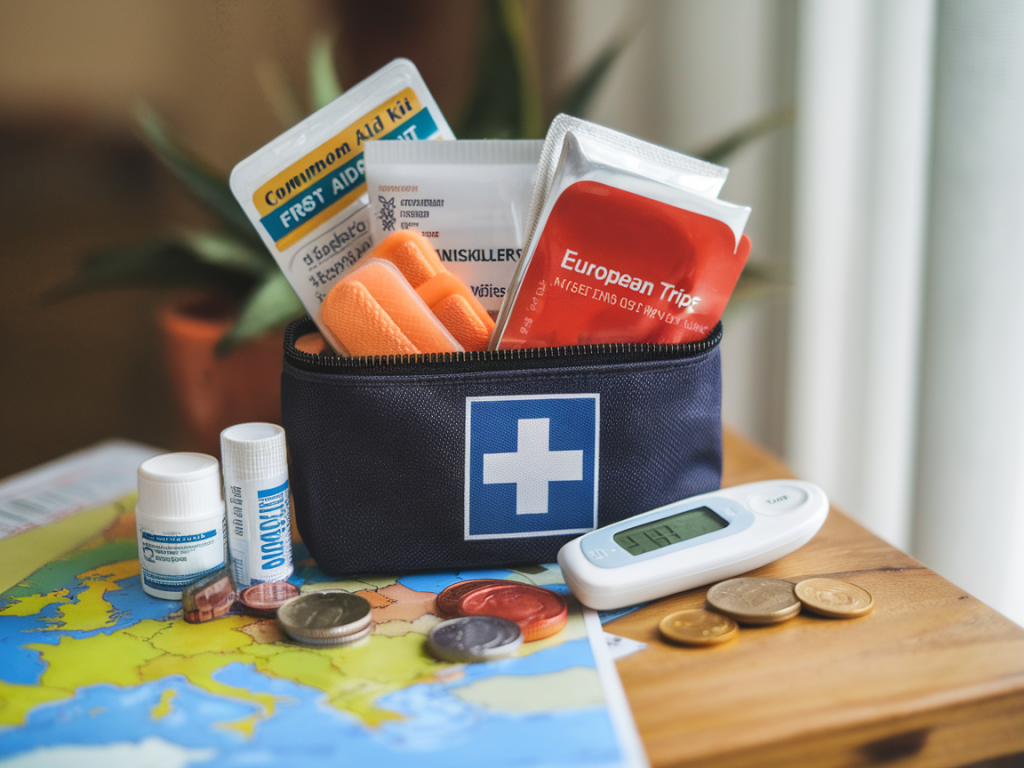
I once learned the hard way that the nearest pharmacy in a small Greek village closes at 2pm on Saturdays. We were two hours from the airport and my partner’s sunburn had turned into a feverish mess overnight. That day I vowed never to rely on luck for basic health needs while travelling in Europe. Over the years I’ve refined a compact, flexible first-aid kit that fits in my daypack and usually avoids “pharmacy panic.” Below I share exactly what I bring, why I choose those items, and a few practical tips for keeping everything legal, light, and effective across different European countries.
Why a compact kit (and what "compact" means to me)
Compact doesn’t mean minimal. It means useful, lightweight, and tailored to common problems: minor cuts and blisters, headaches and fever, tummy troubles, allergic reactions, and motion sickness. My kit fits into a 20 x 15 cm clear zip pouch and travels in my carry-on or daypack so I always have access to it—very handy on trains, ferries and remote hikes.
Core medications I always pack
I focus on generic active ingredients rather than brand loyalty. Generic names are understood across borders and make it easier if you need a refill abroad.
- Paracetamol (acetaminophen) — for pain and fever. I bring 10–20 tablets of 500 mg depending on trip length. Paracetamol is gentle on the stomach and safe when you avoid exceeding the daily dose.
- Ibuprofen — for inflammation and pain. I keep 10–20 tablets of 200 mg. Note: avoid if you have stomach ulcers, severe asthma, or kidney problems.
- Antihistamine (cetirizine or loratadine) — for allergies and hives. One box of 10 tablets is usually enough.
- Anti-diarrheal (loperamide) — practical for short-term control during travel days. I pack a small box (6–10 capsules).
- Oral rehydration salts (ORS) — invaluable for dehydration from gastroenteritis. I carry 4–6 sachets that dissolve in 200–500 ml water.
- Antacid (e.g., omeprazole or a fast-acting antacid) — for heartburn and acid-related stomach pain. A small travel pack or 10 tablets of a PPI/antacid.
- Motion-sickness tablets (dimenhydrinate, cinnarizine, or meclizine) — if you’re prone to nausea on ferries, trains or winding roads. Bring a box of 6–10.
Topical and wound care
Most injuries on holiday are small cuts, scrapes, or painful blisters. The following items help avoid infections and speed healing.
- Antiseptic wipes or solution (e.g., povidone-iodine wipes) — for cleaning wounds.
- Adhesive plasters in various sizes — include fabric and waterproof ones.
- Blister plasters (Compeed or similar) — a holiday lifesaver for walking-heavy itineraries.
- Small sterile gauze pads and medical tape — for larger wounds.
- Antibiotic ointment — check local availability and pack a small tube for open cuts (note: some topical antibiotics like neomycin can cause sensitivities).
- Hydrocortisone cream 1% — for itchy rashes and insect bites.
- Tweezers and small scissors — for splinter removal and cutting tape.
Tools and extras
These little additions make a big difference in usability and emergency situations.
- Digital thermometer — compact models weigh very little and help decide whether to seek care.
- Medical gloves and face masks — handy for cleaning wounds or in crowded medical environments.
- Safety pins and a small sewing kit — mending and makeshift slings.
- Zip-lock bags — for keeping wet items separate or protecting documents.
- Small flashlight or headlamp — useful if you need to treat something in low light.
- Blister prevention tape or moleskin — preemptive care for long walks.
Documents, prescriptions and legal tips
Medicine rules differ across Europe. To avoid hassles:
- Carry prescriptions and a GP letter for any regular medication, written in English and ideally the generic name. If you need controlled substances, verify rules in destination countries in advance.
- List your medications and dosages on a card in English and the local language(s) if possible — Google Translate can help with the translation for essential terms (e.g., "paracetamol = paracetamol/acetaminophen", "ibuprofen = ibuprofen").
- UK travellers: get a Global Health Insurance Card (GHIC) before travel; it covers some NHS-equivalent emergency care in EU countries. It’s not a replacement for travel insurance—always take out good medical travel cover.
- Carry medication in original packaging to avoid questions at border checks or pharmacies.
Air travel rules
Liquids in carry-on follow the 100 ml rule, but medical liquids and essential medications are exempt. Pack liquids and gels like antiseptic sprays or ointments in your checked bag if possible, or bring a doctor’s note for over-100 ml medical liquids. Always keep essential medicines in your carry-on in case luggage is delayed.
When to see a doctor and when to self-manage
Common rules I follow:
- Visit a doctor or local emergency service for heavy bleeding, suspected broken bones, shortness of breath, high fever not responsive to paracetamol/ibuprofen, signs of severe allergic reaction (swelling of face, throat, difficulty breathing), or dehydration that ORS can’t fix.
- For mild fevers, isolated sprains, small lacerations, and traveler's diarrhoea without blood or severe pain, my kit usually suffices and I wait 24–48 hours to see if symptoms improve.
- If you need antibiotics, get a proper evaluation — don’t carry broad-spectrum antibiotics “just in case.” Some countries restrict over-the-counter antibiotic access and for good reason (resistance and side effects).
Local pharmacy realities across Europe
Pharmacies (called “farmacia” in Italy/Spain, “pharmacie” in France, “Apotheke” in Germany) are generally well-stocked, but availability of specific brands or formulations varies. Many European countries keep certain medications behind the counter or classify them as prescription-only (especially stronger painkillers and cough medicines containing codeine). English-speaking pharmacists are common in big cities but less so in rural areas—carry translations or the generic names.
Packing checklist (compact version)
My everyday go-to pouch contains:
- Paracetamol 10 x 500 mg
- Ibuprofen 10 x 200 mg
- Cetirizine 10 tablets
- Loperamide 6 capsules
- 4–6 ORS sachets
- Motion-sickness tablets x 6
- Antiseptic wipes x 6, small antibiotic ointment tube, hydrocortisone 1% tube
- Assorted plasters, 2 blister plasters, sterile gauze, tape
- Tweezers, small scissors, digital thermometer
- Copy of prescriptions, list of meds, GHIC card (if applicable), travel insurance details
That list keeps my bag light but functional. Over time I’ve learned to tailor quantities—long summer trips get a few more ORS sachets and blister plasters; winter city breaks mean extra antihistamines and throat lozenges.
A final practical tip
Before each trip I photograph my prescription list and upload it to a secure cloud folder (and email it to myself). If anything happens to my bag, I can still pull up the photo on any phone and show it to a local doctor or pharmacist. Small preparations save big headaches—because when you’re somewhere new, the last thing you want is to be asking directions to the farmacia at midnight.