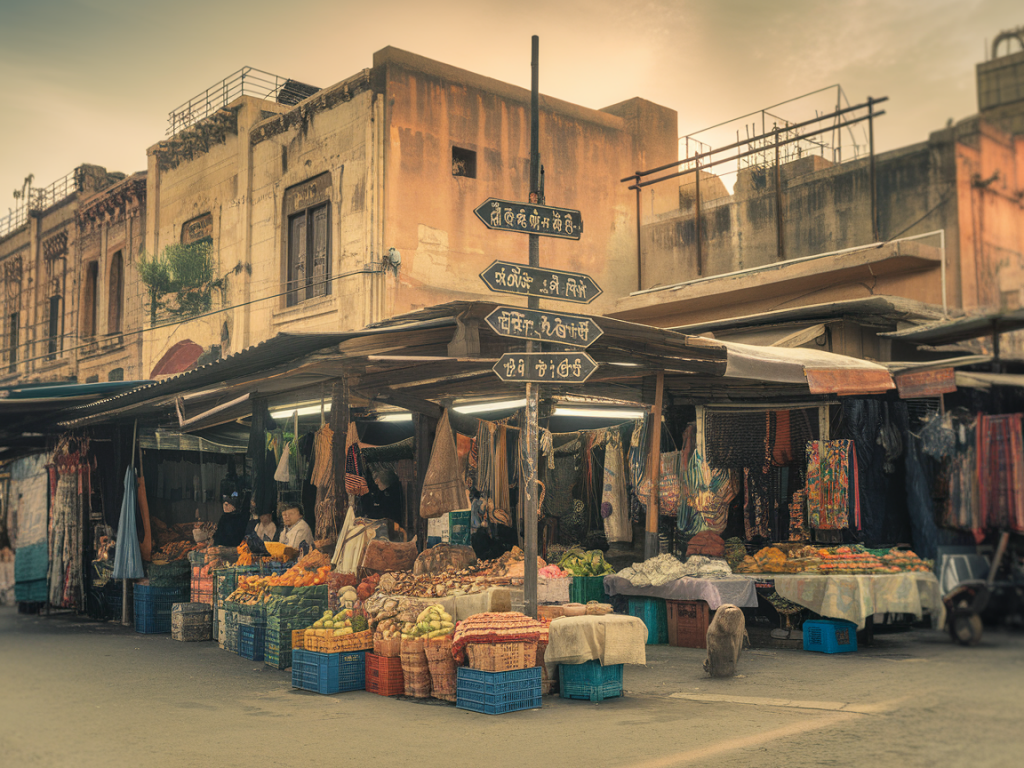
I’ve spent more mornings than I can count wandering through local markets in cities both familiar and new. There’s something irresistible about the hum of vendors, the smell of spices, and the way people arrange their stalls — a kind of living museum where every item, transaction, and layout tells a story. Over time I learned to read markets the way a local might: not just as places to buy food or trinkets, but as mirrors of a city’s history, migration patterns, economic shifts, and even political memories. Here are five clear signs I look for when I want to understand a city through its market.
Stall layout and architecture: who moved where, and when
The first thing I notice is how stalls are arranged and what the surrounding buildings look like. In many older European cities, for example, markets cluster under arcades and in plazas that date back centuries — you can still see traces of medieval trade routes in the narrow alleys. In contrast, markets that sprang up during industrialization often sit near former factories or train stations.
When I visited Porto, Portugal, the Mercado do Bolhão kept its tiled façades and narrow corridors, a reminder of the city’s 19th-century mercantile boom. In cities like Istanbul, the covered bazaars speak of Ottoman urban planning and centuries of long-distance trade. By paying attention to whether a market is open-air, roofed, linear or radial, I can usually infer whether it grew organically over time or was planned as part of urban redevelopment.
- Tip: Notice the materials — wood stalls versus metal sheds can hint at different eras of construction.
- Tip: Look up: signs, layers of paint, and architectural details often reveal older businesses or former uses of the space.
Product mix: recipes, trade networks and colonial legacies
What’s sold at a market is often a short history lesson. When I see spices from former colonies in a European market, or Central Asian dried fruits in a Moscow bazaar, I’m looking at the legacy of trade routes and migration. In Morocco, the blend of Berber, Arab and French culinary goods tells a layered story; in Lima, markets bursting with native potatoes and Amazonian fruits reflect a pre-colonial food history that persists despite colonial foods introduced later.
Markets are especially revealing when they carry unexpected items: Japanese pickles in a Peruvian market, or West African palm oil on a street stall in Paris. Those items mark migration waves and the needs of diasporic communities who recreate familiar tastes abroad.
- Ask: Which items dominate — local produce, imported goods, or a mix?
- Look for: Specific varieties (e.g., local heirloom vegetables) that indicate agricultural continuity.
Language and signage: the city’s tongues and scripts
Signs are a direct line to a city’s linguistic history. In many postcolonial cities, you’ll find a mix of colonial languages, indigenous scripts, and newer immigrant-language signs coexisting. When I walked through Beirut’s souks, Arabic dominated, but French and English appeared in certain shopfronts — small visual clues about who has power in commerce and which communities serve which clientele.
Markets that display multilingual pricing or menus suggest a tourist-facing economy or a multicultural population. Conversely, markets with mostly local-language signage are often authentic spots where residents shop — and where I’ve learned the best phrases for bargaining and ordering.
- Tip: Try reading chalkboards and handwritten notes — they can reveal neighborhood dialects or older place names.
- Tip: Pay attention to how vendors address each other and customers — social cues reveal who’s been here the longest.
Food culture and eating habits: daily rhythms and rituals
Watching what people eat at market stalls tells you a lot about a city’s daily life. In Tokyo, markets with an emphasis on fresh fish and careful packaging point to the Japanese reverence for freshness and ritual. In contrast, open-fire grilling at a street market in Lagos or Rio de Janeiro reveals a culture built around communal, outdoor eating.
Markets also reveal mealtime rhythms. Does the market bustle at dawn with people buying for the day, or does it come alive in the late afternoon when workers stop by for dinner? In Barcelona, I’ve seen markets that slowly build to a lunchtime crowd, while in Marrakech the souks pulse from midday into evening, reflecting local prayer times and social patterns.
- Try: Order the popular dish everyone else is eating — it’s often the simplest, most authentic option.
- Observe: Who eats alone versus in groups? That can hint at urban living patterns and work schedules.
Pricing, bargaining and payment methods: who has access and who doesn’t
Market economics are a blunt instrument for reading inequality and modernization. Cash-only stalls or the stubborn use of local currency indicate informal economies and limited banking access. In cities where mobile payments or contactless cards are ubiquitous at market stalls — like segments of Seoul or Singapore — you’re seeing high financial inclusion and an economy invested in convenience.
Bargaining styles also reveal social norms. A brisk, competitive haggle suggests long-standing market cultures where price negotiation is expected; fixed prices can show a shift towards tourism and formalization. In Athens, I’ve found vendors who expect lively bargaining for clothes and souvenirs, while in modern farmer’s markets in London, prices are fixed and transparency is prized.
| Indicator | What it reveals |
| Cash-only | Informal sector, lower digital penetration |
| Contactless/mobile payments | High financial inclusion, tourist-friendly |
| Active bargaining | Strong market tradition, social interaction valued |
When I travel, I keep a small notebook and jot down prices for everyday items — bread, eggs, a kilo of fruit. Comparing those numbers across neighborhoods often reveals gentrification patterns: central, boutique markets will charge a premium, while peripheral markets hold on to older, more affordable pricing.
How to read a market like a local: practical steps
Over the years I developed a short routine for quickly reading a market’s “story.” It helps me decide whether to shop, photograph, or simply sit and watch.
- Walk a full loop before making a purchase — first impressions can mislead.
- Strike up a conversation; the quickest history lessons come from long-time vendors.
- Buy something small from multiple stalls — you learn diversity of supply and pricing.
- Pay attention to who else is shopping: families, older residents, tourists — their presence matters.
Reading markets is part anthropology, part detective work, and a generous way to meet a city on its own terms. Whether I’m tracking the echoes of colonial trade routes or simply finding the best loaf of sourdough, markets have an uncanny way of revealing the past and present at once — if you know where to look.