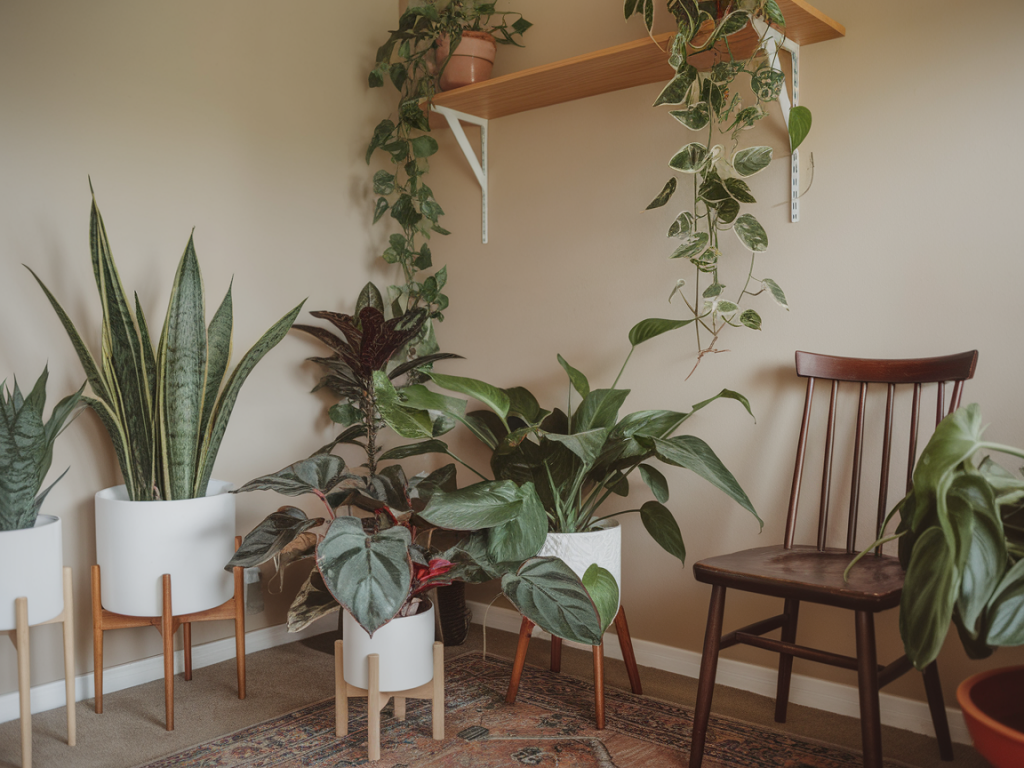
I’ve spent years chasing small curiosities — the little details that make a room feel calmer, a walk feel richer, or a day feel sunnier. Lately I’ve been curious about a very domestic question: can indoor plants actually reduce anxiety? I’ve tried adding greenery to my tiny flat, moved a snake plant to my bedroom, and watched how a few leaves seem to change the atmosphere. But beyond the cozy feeling, what does the evidence say? And which plants work best when you only have a windowsill or a narrow shelf?
What the research actually shows
Short answer: yes — but with nuance. Multiple studies suggest that interacting with plants or simply being around them can lower stress and anxiety markers. For example, controlled experiments have shown reductions in self-reported anxiety, improvements in mood, and even drops in physiological measures like heart rate and cortisol when people spend time tending to plants or sit in plant-filled environments.
However, the effect size varies, and not all studies are equally rigorous. Some rely on small samples or short time frames. Meta-analyses indicate a consistent trend in the direction of reduced stress and improved wellbeing, but the benefits are often modest and likely interact with other factors: the type of plant interaction, the person’s prior affinity for nature (some call this "nature relatedness"), the space’s light and layout, and even cultural expectations about plants.
Importantly, the mechanism isn’t only about air purification — which is often overstated in popular articles. While plants do exchange gases, the amount of indoor air cleaning they provide in a typical home is limited compared with ventilation. The psychological pathways — biophilia (our innate tendency to seek connections with nature), attention restoration (plants offer a gentle, non-demanding focal point), and the calming routine of plant care — are likely the largest contributors to anxiety reduction.
How plants might reduce anxiety
- Biophilia and visual comfort: Greenery provides soft, living textures that our brains interpret as non-threatening and restorative.
- Mindful activity: Watering, pruning, and checking soil are small rituals that encourage presence and gentle responsibility.
- Improved indoor environment: Plants moderate humidity and add visual interest, which can make spaces feel healthier and more comforting.
- Connection and reward: Watching a plant respond to care gives regular low-stakes wins — helpful when anxiety makes big goals feel daunting.
Which plants work best for small spaces and anxious minds
When your square footage is limited, pick plants that are compact, forgiving, and visually calming. I’ve grouped suggestions by the kind of attention they need and the effect they often have.
| Plant | Why it helps | Care (light/water) |
|---|---|---|
| Snake plant (Sansevieria) | Architectural, low-maintenance, cleans the look of a corner | Low-medium light, water sparingly |
| Pothos (Epipremnum aureum) | Trailing habit softens shelves, forgiving for beginners | Low-medium light, moderate water |
| ZZ plant (Zamioculcas) | Glossy leaves, very drought-tolerant — calming to care for | Low light, water rarely |
| Peace lily (Spathiphyllum) | Flowers occasionally, improves humidity, classic calming look | Medium light, likes consistent moisture |
| Herbs (basil, mint, rosemary) | Useful and sensory — smell and use in cooking reduce stress | Bright light, regular water |
| Succulents (Echeveria, Haworthia) | Compact, sculptural, great for a sunny sill | Bright light, sparse water |
Small-space ideas that actually make a difference
- Start with one plant: Bringing one healthy, attractive plant into a spot you use often (desk, bedside, kitchen counter) is better than scattering tiny pots you won't notice.
- Create a ritual: I set a weekly "plant check" on my calendar. Ten minutes to water, wipe leaves, and observe new growth can be steadier than daily finger-worrying.
- Choose vertical or hanging options: A trailing pothos or a few hanging planters save floor space and add layered calm to a wall.
- Use stylish containers: A pretty pot or a tactile basket increases the joy factor. I often swap pots seasonally to refresh the room’s mood.
- Pair plants with sensory anchors: A small speaker playing soft sounds or a scented candle beside a plant can create a mini oasis for anxious moments.
Practical care tips for anxiety-prone plant parents
Anxiety can make it hard to remember routines, or conversely to obsess over minutiae. Here are gentle strategies that keep plants healthy without becoming another stressor.
- Pick low-stakes species: If you tend to overwater, choose drought-tolerant plants like succulents, snake plants, or ZZ plants.
- Use self-watering pots or moisture meters: These tools remove guesswork. I use a small IKEA self-watering pot for a basil plant — it lasts longer between waterings and I worry less.
- Group plants by watering needs: If you have two or three plants on a windowsill, keep their water schedules similar so you aren’t juggling care routines.
- Learn to let go: Not every plant will survive your first season. Treat losses as data — what did the plant want that it didn’t get? Adjust and try again.
Does more green always equal less anxiety?
Not necessarily. For some people, a cluttered room full of plants can be overwhelming. The goal isn’t to mimic a jungle but to introduce intentional, manageable nature. A single thriving plant in a quiet corner can be more beneficial than a dozen struggling specimens scattered everywhere.
Brands and products I’ve found useful
- IKEA pots and self-watering planters: Affordable, minimalist, and easy to replace when you want a refresh.
- Lechuza self-watering planters: These are pricier but excellent for people who travel or who want very low-maintenance greenery.
- Small moisture meters: Inexpensive and a sanity-saver for beginners who aren’t sure when to water.
- Trailing plant hooks and wall planters: Great for converting vertical space into a calming green corner without losing floor area.
Plants aren’t a cure-all for anxiety, but they are a gentle, low-cost tool that many of us can use to make our immediate environment more supportive. I find that the combination of a simple care ritual, a plant that thrives in the light you have, and a little aesthetic intention turns a house plant into a small companion — one that nudges me toward calm when days feel noisy. If you’re starting small, pick one plant you love the look of, place it where you’ll see it, and give it one reliable routine. Often that’s enough to start noticing the quiet benefits.